🌏 MDCU and HITAP Unite Under Initiative to Combat Antimicrobial Resistance: Stakeholder Meeting and Producing Systematic Review
#AMR
Bangkok, Thailand – In a significant step toward strengthening Thailand’s health security, the School of Global Health, Faculty of Medicine, Chulalongkorn University (MDCU), has forged a strategic partnership with the Health Intervention and Technology Assessment Program (HITAP). This collaboration marks the launch of the project “Interventions and Policies for Combating Antimicrobial Resistance in Thailand up to 2025: A Systematic Review,” a key component of the broader GAPi initiative.
Antimicrobial Resistance (AMR) remains one of the most complex challenges facing global public health. While Thailand has implemented various strategies to curb the spread of drug-resistant “superbugs,” evaluating the true impact of these measures has been difficult due to fragmented data. This project aims to solve that problem by conducting the first comprehensive systematic review of Thailand’s AMR landscape.
Strengthening Ties and Bridging Evidence This collaboration serves a dual purpose. Firstly, it strengthens the institutional ties between Chulalongkorn University and HITAP, combining academic rigor with practical policy assessment. Secondly, the project is designed to bridge the gap between “academic evidence” and “real-world implementation.” By moving beyond theoretical research and engaging directly with the authorities who implement these laws, the team ensures that the findings are actionable and grounded in reality.
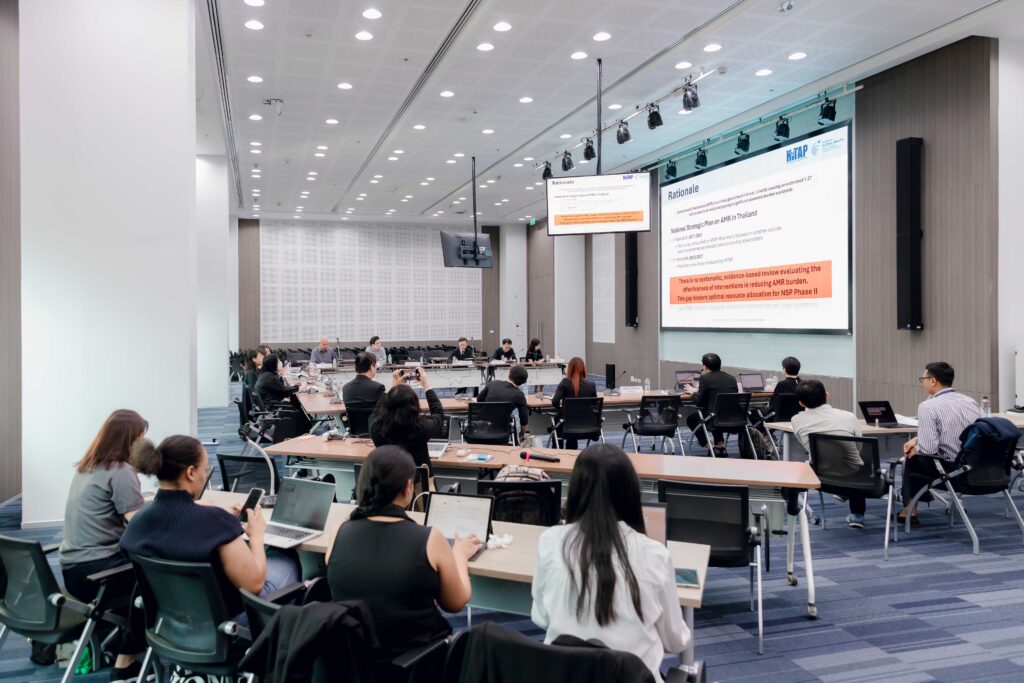
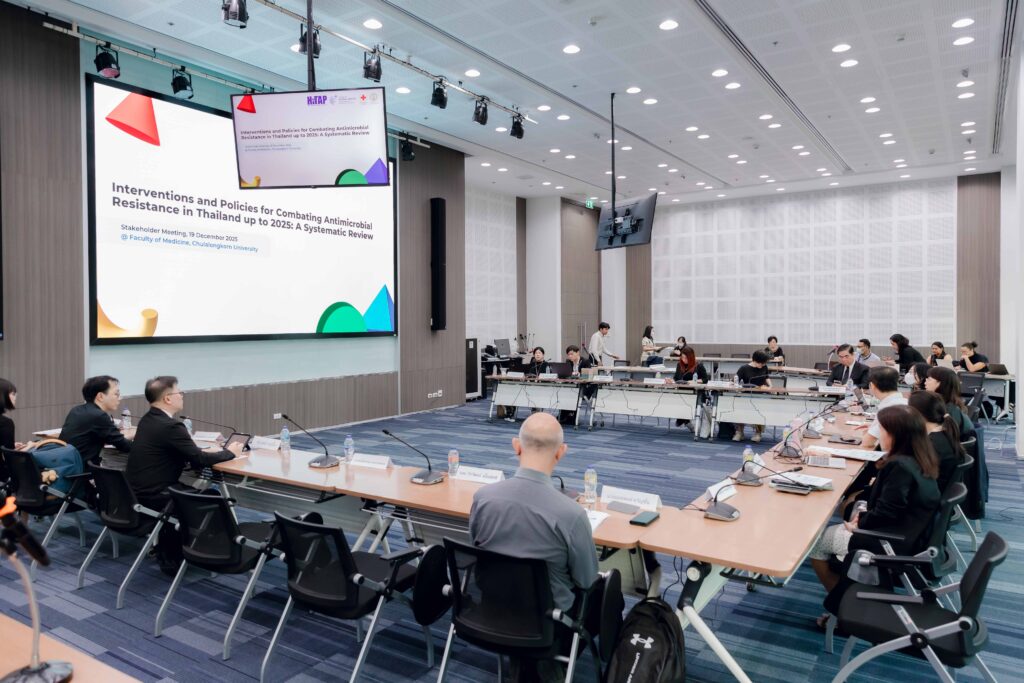
A Stakeholder Meeting The project achieved a major milestone on December 19, 2025, with the successful convening of a stakeholder meeting at the Faculty of Medicine, Chulalongkorn University. The event was attended by 25 key participants representing 13 leading organizations, including the Food and Drug Administration (FDA), the Department of Disease Control (DDC), and various professional healthcare councils.
From Insights to Policy The meeting yielded highly insightful results that went far beyond standard academic data. Stakeholders directed the research team toward critical “grey literature”
The research team will now incorporate these findings to synthesize a robust evidence base. This work is not merely for publication; it is designed to serve as a decision-making tool. By identifying what has worked and what has not over the past decade, this GAPi initiative project will empower Thai authorities to formulate precise, evidence-based policies, ensuring that the next phase of Thailand’s fight against AMR is both efficient and effective.