SAFE Reproductive Health Lecture
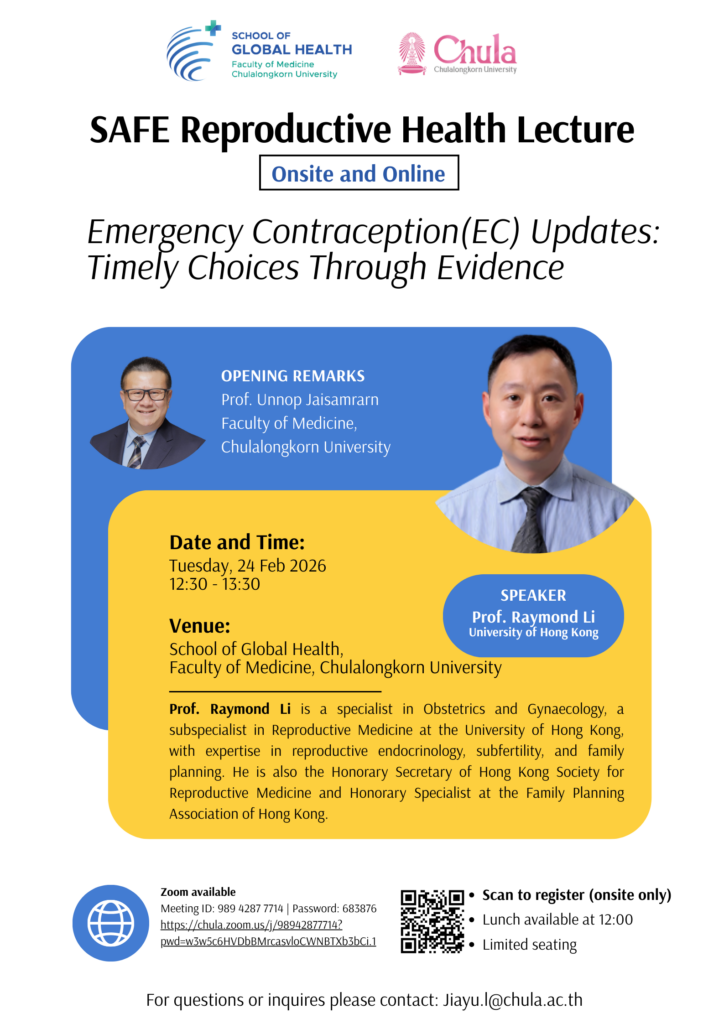
Bangkok, February 24, 2026 — The School of Global Health, Faculty of Medicine, Chulalongkorn University, hosted the SAFE Reproductive Health Lecture titled “Emergency Contraception (EC) Updates: Timely Choice Through Evidence.” The session featured Professor Raymond Li from the Department of Obstetrics and Gynaecology at the University of Hong Kong, who shared recent scientific developments and practical perspectives on emergency contraception with students, researchers, and health practitioners.
Professor Unnop Jaisamrarn, Director of the Global Women’s Health Program, delivered the opening remarks and welcomed participants. He emphasized the importance of continued research, education, and international collaboration to improve awareness and access to emergency contraception as part of comprehensive reproductive health care.
During the lecture, Prof. Raymond Li introduced the concept of emergency contraception and reviewed currently available options, including oral hormonal methods and copper intrauterine devices (Cu-IUD). He discussed the mechanisms of action, effectiveness, and regulatory considerations surrounding these methods, noting that access and availability may vary across countries depending on national policies and health systems.
The presentation also highlighted emerging research exploring strategies to improve the effectiveness of EC, including studies evaluating co-administration approaches. Prof. Li further addressed common misconceptions surrounding emergency contraception and stressed the importance of evidence-based public education to ensure informed reproductive health choices.
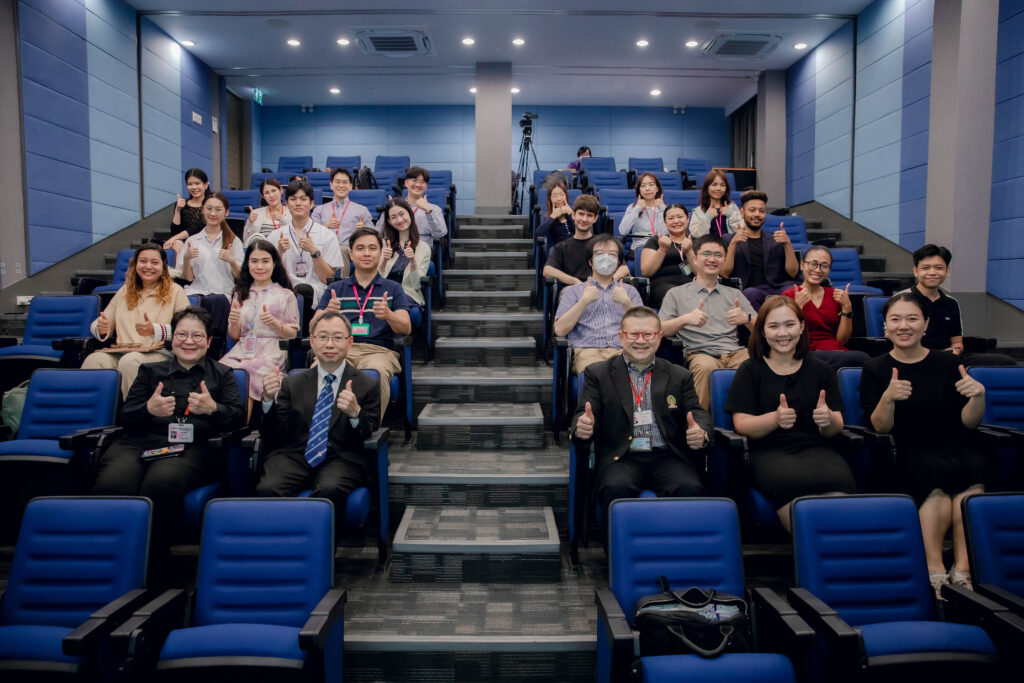
The lecture attracted both in-person and virtual participants, creating an engaging learning environment for students and professionals interested in reproductive health. Through a comprehensive overview of the history, mechanisms, and evolving evidence surrounding EC, the session provided valuable insights into current progress and future directions in the field.
This lecture forms part of the ongoing SAFE Reproductive Health Lecture Series organized by the School of Global Health and the Global Women’s Health Program. The initiative aims to promote knowledge exchange and strengthen capacity in sexual and reproductive health through education, research, and international collaboration.
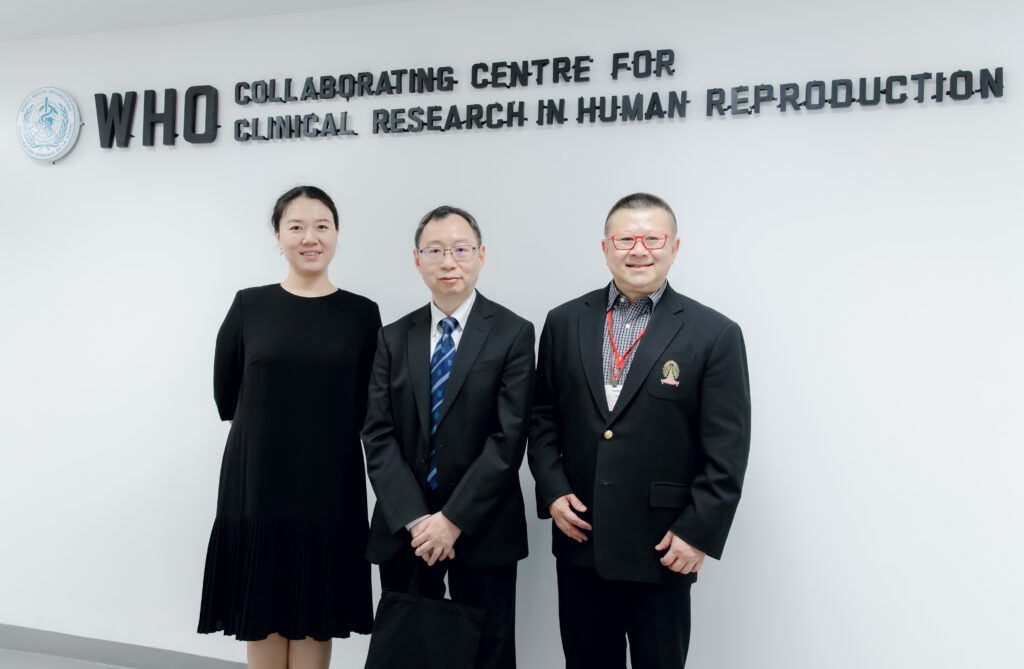
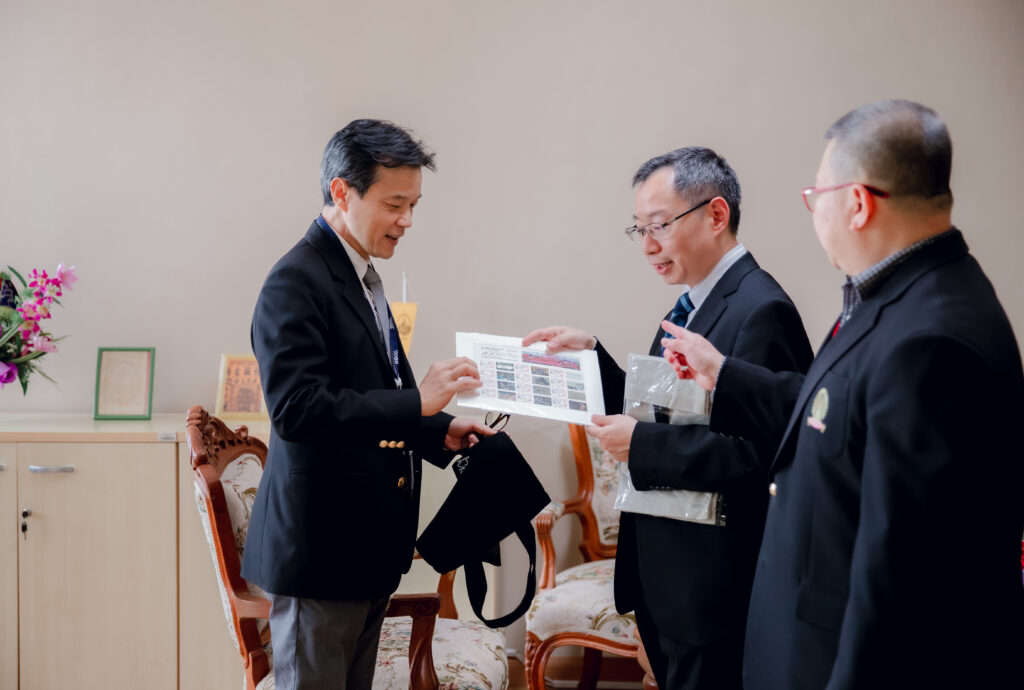
Following the lecture, participants engaged in further discussions on potential academic collaboration between the teams. Representatives from the Department of Obstetrics and Gynaecology were also invited to join the conversation, exploring opportunities for future cooperation in research, education, and clinical engagement in the field of reproductive health.
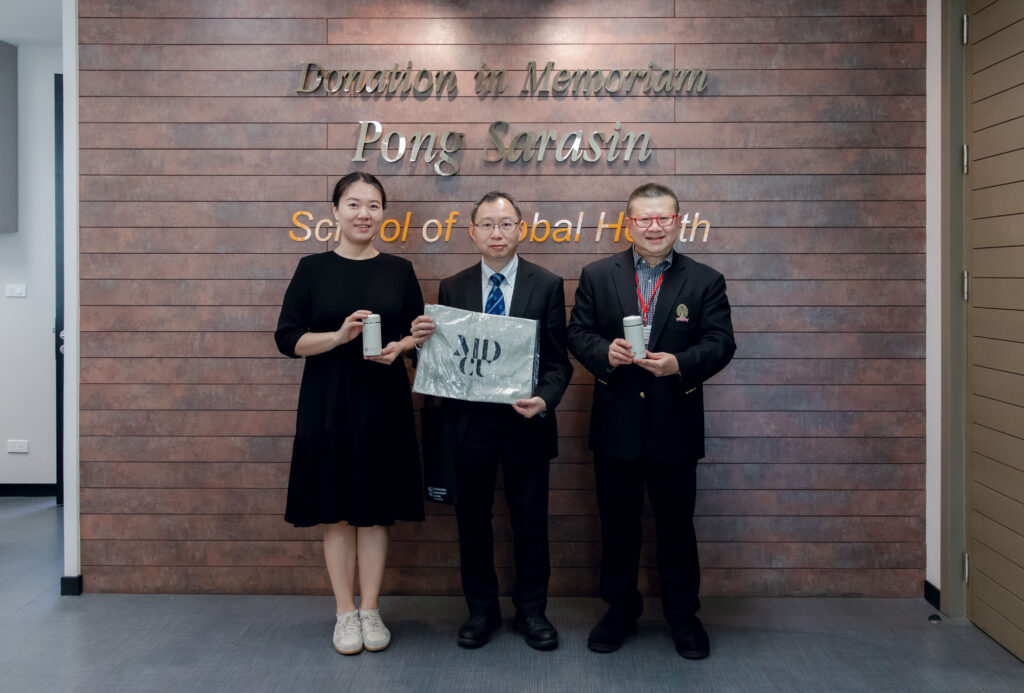
The School of Global Health extends its appreciation to Professor Raymond Li, all participants, and partner institutions for contributing to this informative and meaningful session.