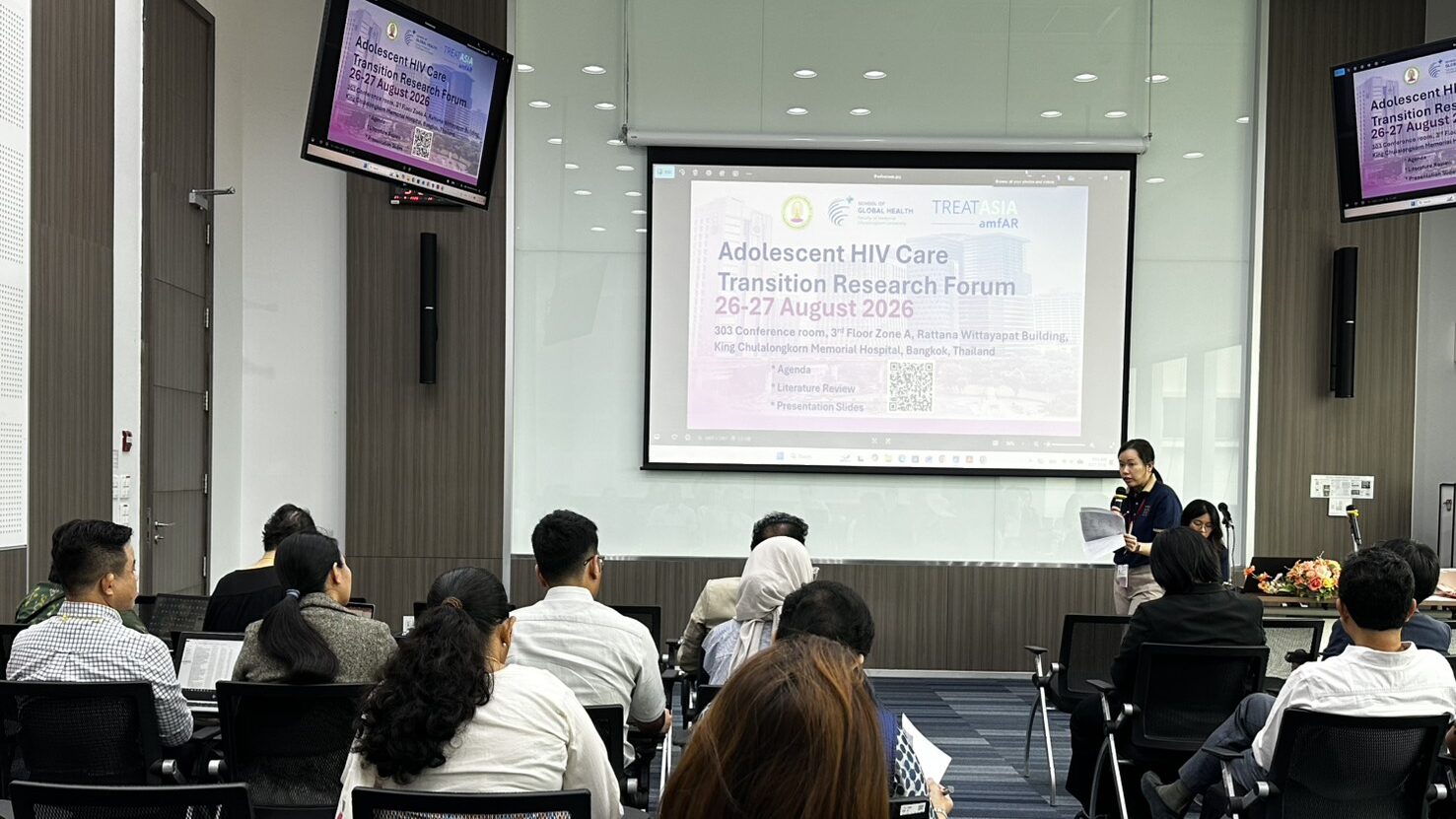
The School of Global Health and Center of Excellence for Pediatric Infectious Diseases and Vaccines, Faculty of Medicine, Chulalongkorn University, in collaboration with TREAT Asia/amfAR, convened the Adolescent HIV Care Transition Research Forum on 26–27 August 2026 at the Faculty of Medicine, Chulalongkorn University, Bangkok, Thailand.
The two-day forum brought together clinicians, researchers, healthcare providers, youth representatives, and experts from across the region to exchange experiences, evidence, and best practices related to the transition of adolescents and young adults living with HIV from pediatric to adult care.
Through expert presentations, country experience sharing, panel discussions, and facilitated group work, participants explored key issues affecting HIV care transition, including clinical outcomes, neurological and cognitive development, stigma and mental health, structural and health-system barriers, and the lived experiences of young people. Country experiences also provided an opportunity to identify similarities and differences in HIV care outcomes and transition practices across different settings.
Building on these discussions, participants worked together to identify priority areas for future research and develop potential research concepts in three key areas: HIV-related clinical care, mental health and social determinants, and implementation of HIV care transition models. Potential approaches included analyses of existing cohort data, new data collection, and pilot studies.
The forum aimed to address important gaps in ensuring comprehensive, continuous, and quality care throughout the HIV care transition period, while strengthening regional research collaboration. The research priorities and concepts developed during the forum are intended to contribute to future evidence that can inform the development, implementation, scale-up, and sustainability of adolescent-responsive HIV care transition services.
The forum emphasized that successful HIV care transition extends beyond the transfer from pediatric to adult services. Supporting young people through this period requires attention to their clinical, developmental, psychological, and social needs, as well as health systems that can provide continuous and responsive care as they move into adulthood.